Give each record a specific job
Under NIST SP 800-171 Revision 2, requirement 3.12.4 addresses system security plans, including system boundaries, the operating environment, implementation, and connections to other systems. Requirement 3.12.2 addresses plans of action for deficiencies and vulnerabilities. The NIST-hosted implementation presentation explains these distinct roles.
- System security plan (SSP)
- The description of the actual environment and implementation. Update it when the environment or implementation changes.
- Supporting evidence
- The records a reviewer can use to understand what was configured, performed, or checked, together with the relevant scope and date.
- Remediation record / POA&M
- The record of a gap, its owner, planned action, target date, and the basis for considering it closed. Assessment-specific POA&M rules still apply.
Build a short, traceable evidence chain
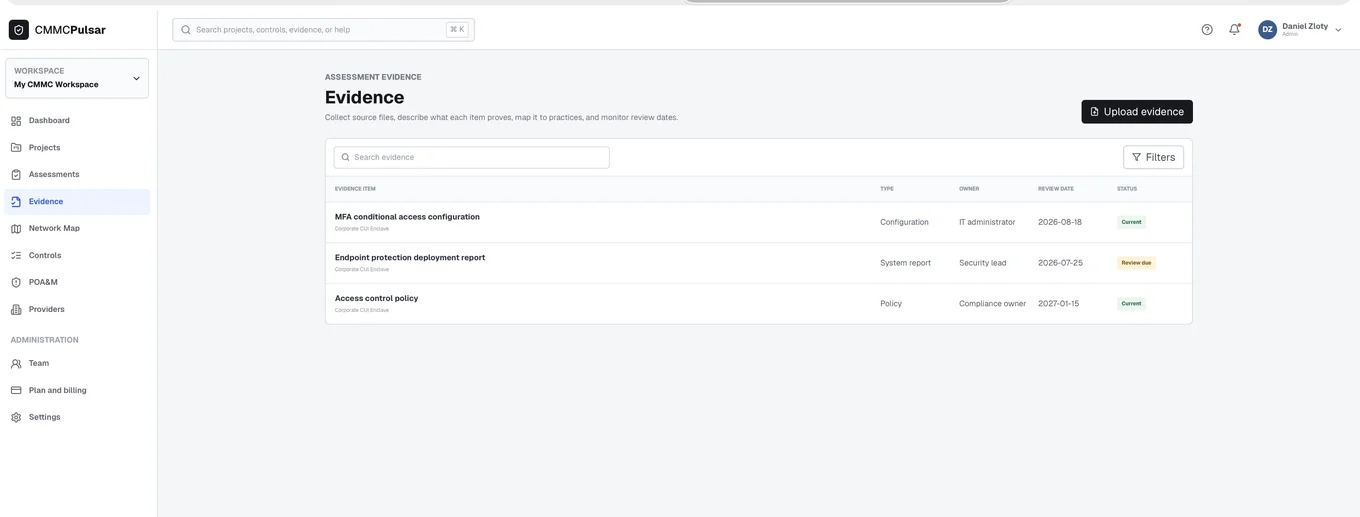
For each requirement, write a plain-language implementation statement. Then link the supporting material and identify who maintains it. A practical evidence index can record:
- The requirement or objective the material supports.
- The relevant system, asset, or group of users.
- The person responsible for collecting and reviewing it.
- The observation or collection date and any period covered.
- A controlled storage location and a short explanation of what the material demonstrates.
This is a suggested organizing method, not a government-prescribed evidence template. Choose a structure that makes your environment understandable and protects the underlying information. Avoid copying sensitive operational data into a public contact form or an unapproved sharing location.
Treat remediation as work that needs a closure check
A useful gap entry describes the missing implementation clearly enough that someone else can act on it. Assign an owner, identify dependencies, set a realistic next milestone, and record how completion will be verified. When work is done, collect the new supporting material and review the implementation statement and SSP for needed updates.
For example, a fictional team might discover that its documented access review process has no recent review record. Its next step is to perform and document the review, resolve findings, and confirm the procedure reflects what actually happened. Uploading an empty template should not turn that work into a completed requirement.
The CMMC program does not permit POA&Ms for Level 1 and places conditions on their use at other levels. A normal project backlog and an assessment-eligible POA&M are not automatically equivalent. Consult the official program guidance before relying on a remediation item for an assessment outcome.
Keep diagrams, providers, and documents synchronized
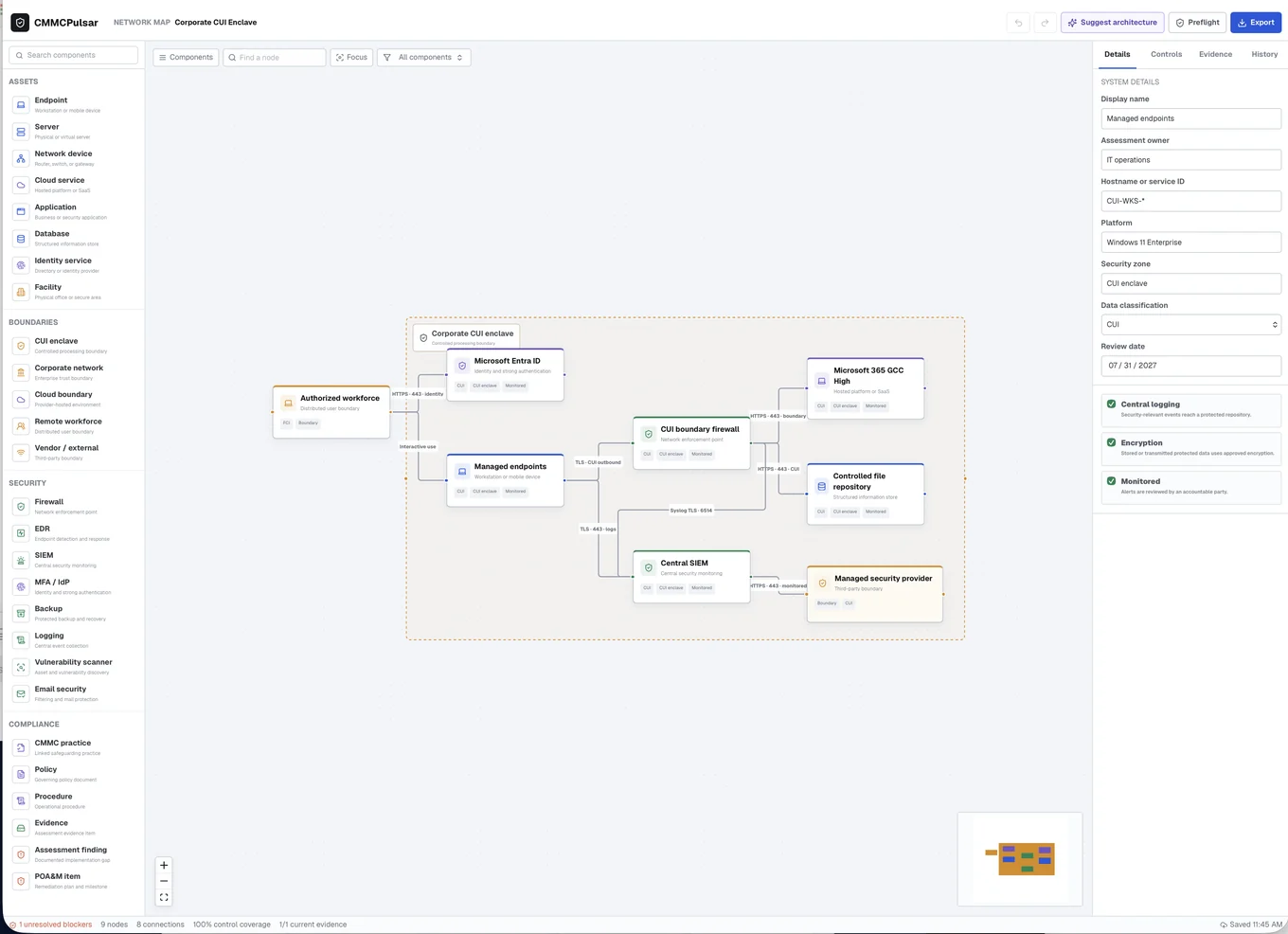
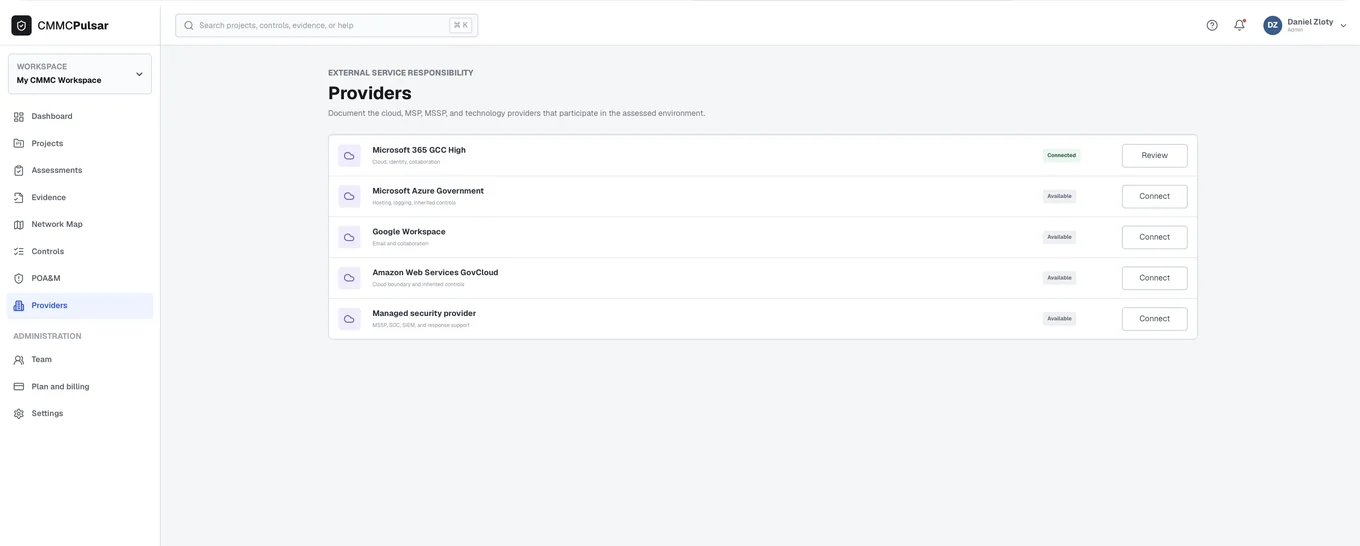
When an application moves, a provider changes, or a new connection is introduced, review the architecture and its supporting records together. Ask whether the boundary changed, who now performs the safeguard, whether the implementation statement is still accurate, and whether the evidence still covers the relevant environment.
In CMMC Pulsar, the architecture workflow, evidence view, and remediation workflow provide places to organize that relationship. AI-assisted drafts still require a person who understands the system to review the result.
Run a review before you export
Pick a sample requirement and ask a teammate to follow the entire record without verbal coaching. Can they identify the relevant system, understand the implementation, find the evidence, and distinguish an unresolved gap from completed work? Use the confusion you find to improve the record before preparing the broader review packet.
A polished export is useful when its contents reflect reality. Keep the source records current so the next review starts from a maintained workspace instead of a reconstruction exercise.
Sources & further reading
- NIST-hosted SSP and plans-of-action explanation ↗
- NIST SP 800-171 Revision 2 publication record and SSP resources ↗
- CMMC program overview and POA&M rules ↗
- SPRS CMMC reference materials ↗
Published October 24, 2026. Government and company references were checked while preparing this page. General information and practical workflow suggestions; confirm the requirements and services that apply to your organization.